
On this page
A quote template for trade work needs your details and a reference, the work written as tasks, what's excluded, any allowances, a total including VAT, how long the price stands, when you can start, the payment stages and how to accept. If the work is agreed in the customer's home, they must also get cancellation information and a cancellation form. Below is a quote template to print or copy, what to write in each part, and a filled-in example.
It works for plumbers, heating engineers, electricians, roofers, builders and joiners, from a one-day repair to a kitchen. For how quoting fits with the site visit, pricing and following up, see how to write a quote for trade work and follow it up.
The quote template to print or copy
Use the template below as your quote layout, on headed paper, in a spreadsheet or in your quoting app. Each part is there because a customer, or your own office, will look for it later. Leave a part blank only when it doesn't apply, and write "none" rather than deleting it, so the customer can see you thought about it.
The rest of this guide goes through the parts customers query most: the scope, what's excluded, allowances, VAT, the validity period, deposits and the cancellation details.
Write the scope as tasks someone could check
The scope is the part of the quote that matters most if anything goes wrong. "Bathroom refit" or "rewire" is a heading, not a scope. A customer reading it can imagine anything, and so can a fitter you send.
Write each task so the customer, your engineer and anyone looking at a dispute later would agree whether it was done: "remove existing felt roof covering and dispose of it", "replace fascia board on the front edge", "fit a new outlet to the existing downpipe". Number the tasks, so a variation can refer to "task 3".
This isn't only good practice. Under section 50 of the Consumer Rights Act 2015, what a trader says or writes to a consumer about the service can become a term of the contract if the consumer relies on it when deciding to go ahead. So the scope you write is the scope you've agreed to do. If you say "making good included", you're making good.
List materials and fittings by what the customer will see: "white close-coupled WC with soft-close seat, as brochure page sent 4 March" rather than "WC". Where the customer is choosing an item later, use an allowance instead (see below), so the quote still has a fixed total.
If the customer wants to compare options, such as a combi boiler against a system boiler, or felt against rubber on a flat roof, quote each as a separate option with its own scope and its own total. A price range such as "£2,400 to £3,100" invites the customer to hear the lower figure and you to charge the higher one. Two fixed options let them choose, and the accepted option is clear.
If the customer is supplying their own items, say so in the scope, and say that you're not responsible for missing parts or faults in items you didn't supply.
Exclusions and assumptions that prevent arguments
Most quote disputes start with something the customer assumed was included. A "not included" section answers those questions before they're asked.
Put the likeliest arguments in it, near the price rather than on page four: decorating after the work, making good plaster beyond the immediate area, moving furniture, removing old appliances, and anything you saw on the visit that you're deliberately leaving alone. If you saw a cracked tile next to the one you're replacing and you're not touching it, say so.
The "price depends on" section does the same job for conditions you can't see. "Price assumes the existing joists are sound", "price assumes clear access to the loft from 8am", "price assumes the existing gas supply is adequate for the new boiler". Then say what happens if an assumption turns out wrong: "If it isn't, we will stop, show you and price the extra before doing it."
| Vague wording | What to write instead | Why it helps |
|---|---|---|
| Bathroom refit | Remove bath, basin and WC; fit new suite as listed; tile two walls to full height | Both sides can check each task was done |
| Making good as required | Fill and sand around new sockets; decorating not included | Stops a free redecoration being expected |
| Subject to survey | Price assumes joists are sound; any rotten joists priced and agreed before work | Says what happens if the assumption fails |
| Price for materials TBC | PC sum of £600 for the vanity unit; difference added or credited at cost | Keeps a fixed total while the customer chooses |
| Start ASAP | Earliest start w/c 9 March if accepted by 27 February | Gives a date the customer can plan around |
Provisional sums and allowances, settled in writing
Some costs can't be fixed when you quote. Two kinds of allowance keep the quote fair without leaving the total open.
A provisional sum is an allowance for work you know might be needed but can't measure yet, such as replacing rotten boards when the old roof comes off. A prime cost (PC) sum is an allowance for an item the customer hasn't chosen yet, like tiles, a vanity unit or light fittings.
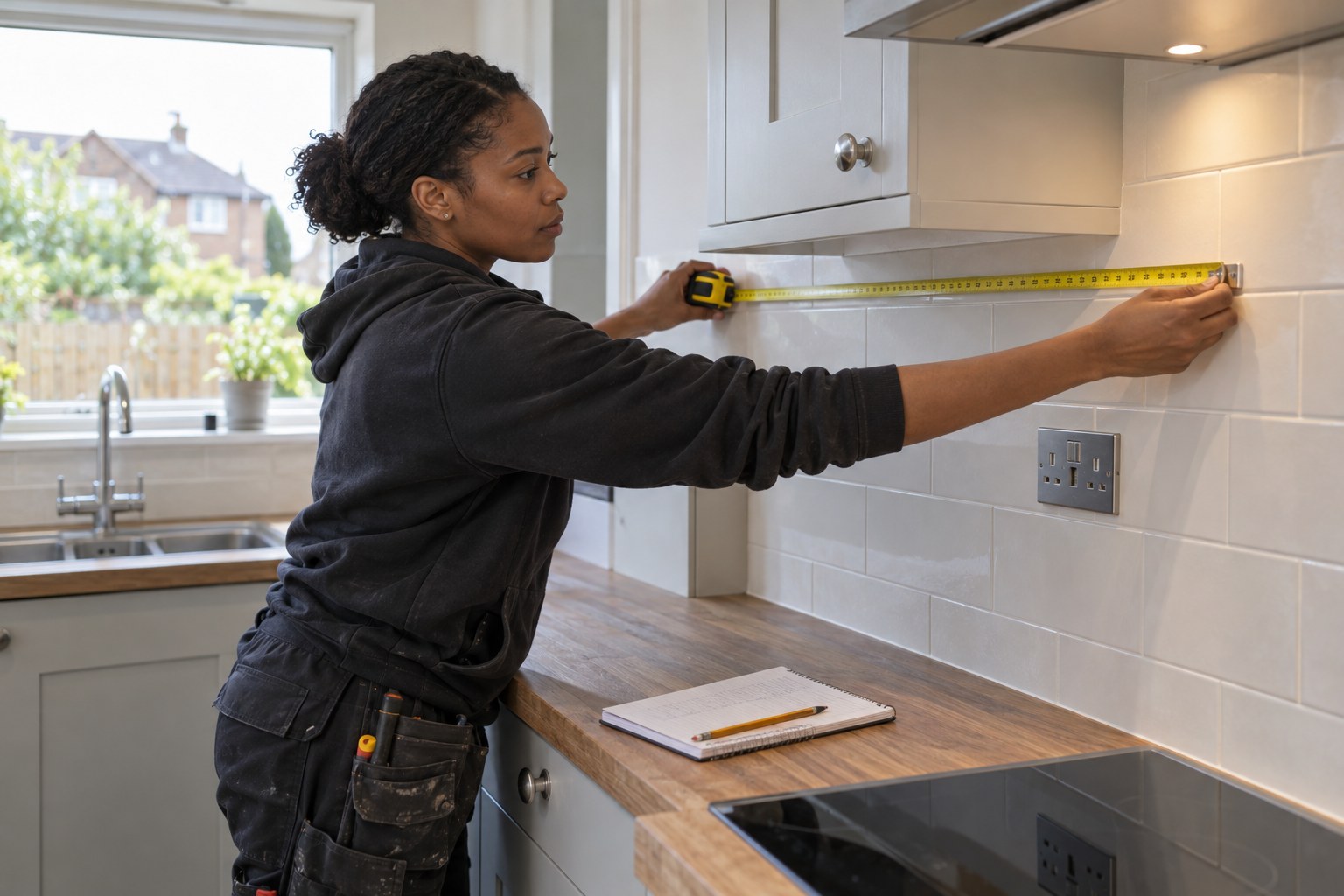
Both are fair if the amount is realistic and the quote says how it will be settled: the actual number of boards at a stated rate, or the actual cost of the tiles with your markup stated. Add a line promising to show the customer before you go over the allowance. Setting a provisional sum at £50 for something that will obviously cost £500 only moves the argument to the invoice, and customers notice.
Include allowances in the total including VAT, so the headline figure is still the most likely final price.
Show VAT and one total to pay
Show the price the way the customer will read it: the main parts of the cost, a subtotal, the VAT and a total including VAT. Make that total the biggest number on the page. A homeowner who sees £2,440 and later gets a bill for £2,928 feels misled, even if "plus VAT" was in small print.
GOV.UK says a VAT-registered business must include VAT in the price of all goods and services at the correct rate. Put your VAT number on the quote. If you're not VAT registered, say so, so the customer knows the total is the total. GOV.UK says you must register for VAT if your taxable turnover for the last 12 months goes over £90,000, so a growing firm should check where it stands before quoting a large job.
Business customers such as landlords and letting agents often compare prices before VAT, so for them show both the subtotal and the total clearly. The figures should still add up on the page, line by line.
Validity period and start date
Put a date on every quote after which the price no longer stands: "This price is valid until 3 April." A date is clearer than "30 days", which leaves the customer working out when the 30 days started. A month is a common choice for domestic work, shorter if material prices are moving.
Separately, say when you can start and what that depends on: "Earliest start w/c 23 March, if accepted by 13 March and subject to materials being available." Don't promise a start date you can't hold. If a customer accepts in three weeks' time, the slot you mentioned may have gone, and the quote should say so.
If a quote expires and the customer comes back later, re-check the price before you confirm it, and issue a new version rather than editing the old one.
Deposits and stage payments customers accept
Citizens Advice tells homeowners not to pay everything up front, to pay in stages, and not to agree to a deposit of more than 25%. It also tells them to get the price in writing before agreeing to work. A customer who has read that will hesitate at a 50% deposit.
The table below shows illustrative payment terms for three sizes of job. They are examples to adapt, not rules.
| Job | Deposit | Stage payments | Balance |
|---|---|---|---|
| Boiler swap, about a day | Up to 25% on acceptance, towards the boiler | None | On completion |
| Flat roof, two days | 20% on acceptance, for materials | None | On completion |
| Kitchen refit, two weeks | Up to 25% when the units are ordered | After first fix, and after worktops are fitted | On completion |
So tie any deposit to a real cost, such as ordering the boiler or the roofing materials, keep it to a level the customer can agree to, and give a receipt. For longer jobs, set stage payments at points the customer can see, such as first fix complete or roof covering on, and leave a final payment for completion.
Write the payment terms on the quote exactly as they'll appear on the invoice: the amounts, when each is due, and how to pay. The guide to invoicing and payment terms for trade work covers what to agree before you start.
Cancellation details for work agreed at home
If a home customer agrees to the work in their home, or anywhere away from your business premises, it's an off-premises contract under the Consumer Contracts Regulations. Business Companion, the trading standards guidance for businesses, sets out what you must give the customer before they're bound. That includes the main features of the work, your identity and address, the total price including tax, the payment and performance arrangements, and the customer's right to cancel, with the conditions, time limit and how to cancel. The information must be given on paper, or on another durable medium such as email if the customer agrees.

For a service, Business Companion says the cancellation period is 14 days, starting the day after the contract was made. You must also give the customer a cancellation form; the regulations include a model form you can use. If you don't give the cancellation information, the period is extended until 14 days after you give it, up to a maximum of 12 months. Business Companion says failing to give the cancellation information before the contract is a criminal offence.
If the customer wants you to start within the 14 days, they must ask you to, on paper or by email or text. If they then cancel, they pay only for the work done up to that point. The "home customers" section of the template records both: that the cancellation information and form were given, and the date of any request to start early.
Agreements made by phone, email or online have their own rules, and some small contracts are exempt. The Quotes hub covers which apply. Business Companion's guidance covers England, Scotland and Wales; Northern Ireland has separate guidance.
This is not legal advice. It summarises the guidance and legislation linked here. If you're unsure which rules apply to your contracts, take advice before you rely on them.
Example: a flat garage roof quote
This is an invented example to show the template filled in. The names and prices are made up, and the prices are not a guide to what roofing costs.
Illustrative example: a flat garage roof quote
Business: Alder Roofing (VAT registered, VAT number on quote); quote Q-0231, version 1, issued 2 March
Customer: Mr Byrne, homeowner, approves all costs himself
Scope: 1. Strip existing felt covering and dispose of it. 2. Replace front fascia board. 3. Fit new EPDM rubber membrane with trims. 4. Fit new outlet and connect to existing downpipe.
Materials: EPDM membrane, adhesive, edge trims, fascia board, outlet, as discussed on site
Not included: repairs to garage walls or door; decorating the new fascia
Price depends on: roof decking being sound
Allowance: provisional sum £270 for up to six rotten deck boards at £45 each, settled at the number used, shown to the customer before fitting
Price: labour £1,150, materials £780, skip £240, provisional sum £270; subtotal £2,440; VAT at 20% £488; total including VAT £2,928
Valid until: 1 April; earliest start w/c 16 March if accepted by 9 March; duration 2 days
Payment: deposit £585.60 (20%) on acceptance, for materials; balance on completion by bank transfer within 7 days
Home customers: agreed at the customer's home on 4 March; cancellation information and form given on paper; customer emailed on 4 March asking for work to start on 16 March, inside the cancellation period
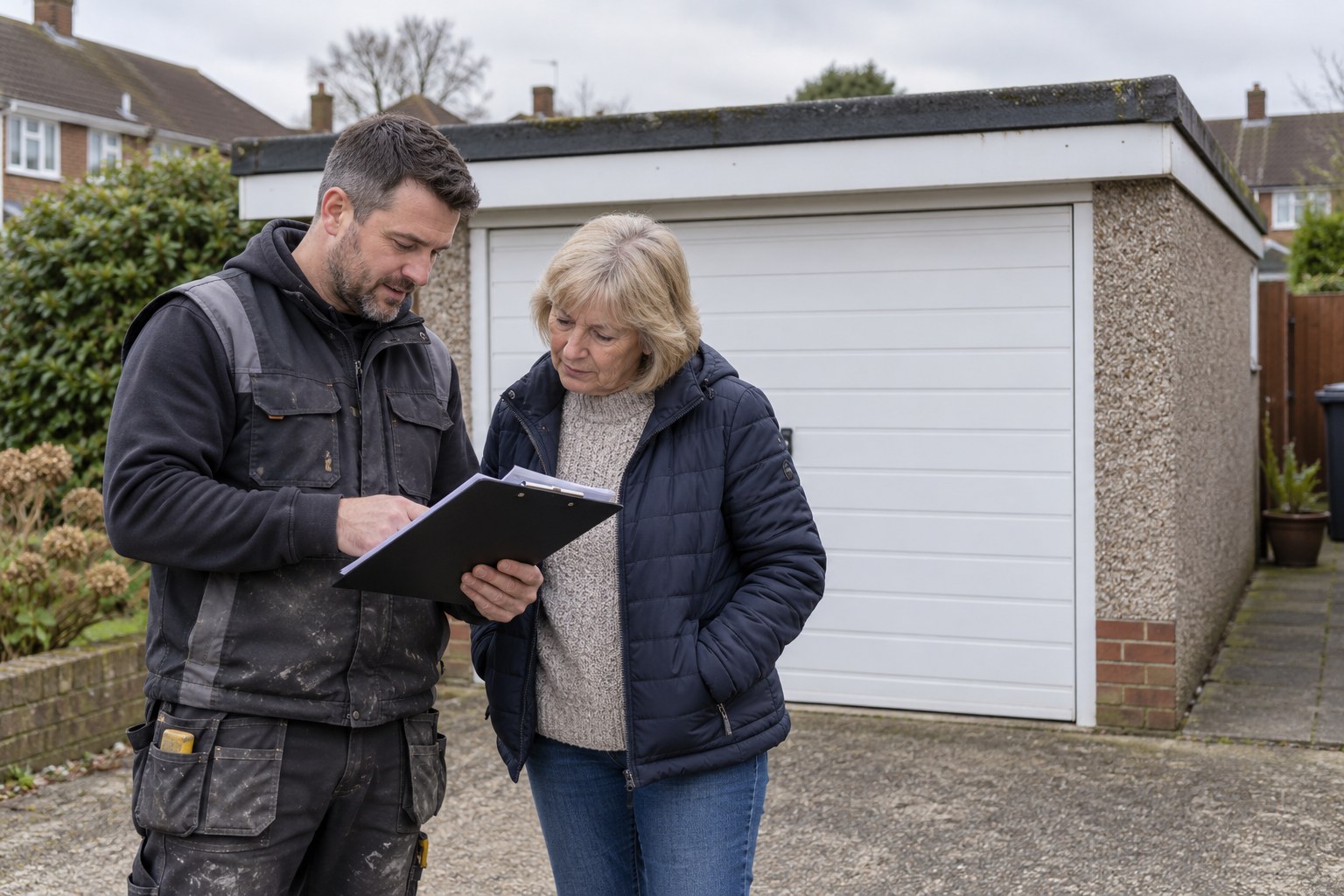
Mr Byrne reads the quote at the garage with the roofer, asks one question about the fascia, and signs it there and then. Because he agreed at home, he gets the cancellation information and form on paper. He'd like the work done before the forecast rain, so he emails the roofer that evening asking for it to start on the 16th. The roofer saves that email with the quote. If the decking turns out sound, the £270 provisional sum isn't used, and the final invoice is £2,604 including VAT.
How the customer accepts, and what happens next
End the quote with one clear way to say yes: "Reply to this email with 'I accept quote Q-0231 version 1'", or a signature line. A reply that names the quote and version leaves no doubt about which price was accepted, which matters when there have been two or three versions.
When the customer accepts, confirm it in writing the same day with the start date, the deposit and how to pay it. Then record the acceptance in your quote register against the reference, and the quote becomes the brief for the job. Our job sheet template for trade visits picks up from there, so the engineer works from the accepted scope rather than from memory.
Landlords, letting agents and business customers often accept differently. An agent may need the landlord's approval, and a business may need to raise a purchase order before a yes counts. Ask who approves the quote and how, write that name in the "approves extra cost" line, and don't book the job until the approval or order number arrives. Put the order number on the job record and the invoice, so payment isn't held up later.
If anything changes before or during the job, issue a new version or a written variation, never a correction to the original. "Version 2 replaces version 1" at the top of the new quote tells everyone which one counts.
The details you capture at first contact feed straight into the quote. If the enquiry record already holds the customer's name, the job address and the problem in their words, the quote starts half written. Our enquiry form template for trade businesses sets out those fields.
Rewrite your next quote on the template
Take the next quote you were about to send, and put it into the template. Read each part as the customer would: the scope, what's excluded, the total including VAT, the date the price runs out and how to say yes. Anything you'd expect a phone call about is the part to rewrite before it goes out.
Check your quoting app, then follow the quote up
Free tool
Trade business software checklist: know what you need before you book a demo
List what a quoting or job app has to do before you trust it with your quotes.

Read next
Quote follow-up messages: what to send after a trade quote, and when to stop
Three messages to send after the quote goes out, and when to stop chasing.
Sources checked for this guide
Quote content, VAT and cancellation points checked against Citizens Advice, legislation.gov.uk, GOV.UK and Business Companion guidance. These are the primary sources used in this guide.