

Before you turn down a job, decide which kind of no it is: "not now" if you'd take it when the customer can wait, "not this job" if it isn't work you do or it's too small or too far, and "not us" if you've looked and it isn't right for you. Each one needs different words, and the customer remembers which one they got.
A clear, quick no keeps the door open. The customer gets an answer, a next step, and a reason to ring you for the next job. Below is how to tell the three apart, three messages to copy, how to handle small and distant jobs and customers you'd rather not work for, why pricing a job high to put someone off can backfire, how to recommend another firm, and how to record every no. It's for trades who take their own calls. For the rest of the enquiry routine, see the guide to handling calls and enquiries.
Which kind of no is it?
Ask two questions. Would you do this job if you had the time? If yes, it's "not now": offer a date or a name. Is it work you do, in your area and at a size that suits you? If not, it's "not this job": say so and point them elsewhere. Seen it and don't want it? That's "not us".
Most turned-down jobs are "not now". A full diary is the commonest reason to say no, and it's the one most likely to bring the customer back if you handle it well. Give them a real date, or the name of someone who can come sooner, and you've done them a favour even though you said no.
"Not this job" covers work outside your trade or your registration, jobs too small to cover the trip, and addresses outside the area you cover. "Not us" usually comes after a visit, when the job turns out bigger, riskier or different from what the call suggested, or when something about the job makes you wary.
Reply quickly, even when the answer is no
The worst way to turn down a job is not to answer. A customer who hears nothing waits, rings again, and then tells people you never got back to them. A no sent the same day costs you a minute and leaves them free to ring someone else while the week is still young.
Answer every enquiry, including the ones you'll turn down, within the callback time you'd give anyone else. If you can't ring, send a text.
If you're booked for weeks at a time, say so before people ring. A line in your voicemail greeting and on your website, such as "we're booking new work from early next month", saves you a lot of no messages and saves callers a wait.
Too busy: offer a date or a name
When you're too busy, the customer wants to know one thing: when could you do it? Give them the earliest date you can keep, and let them choose. Some will wait for a firm they've heard good things about, and a job booked three weeks out is still a job.
If the job is urgent, a date three weeks away doesn't help them, so say that before they have to. Then give them a name if you have one. A customer with water coming through the ceiling remembers who helped them find someone that day.
The names and wording in these messages are invented examples. Change the bracketed parts to fit the job and your own way of speaking. Only name another firm you'd trust in your own customer's home, and ask them first whether they're taking work.
Not work you do: send them somewhere useful
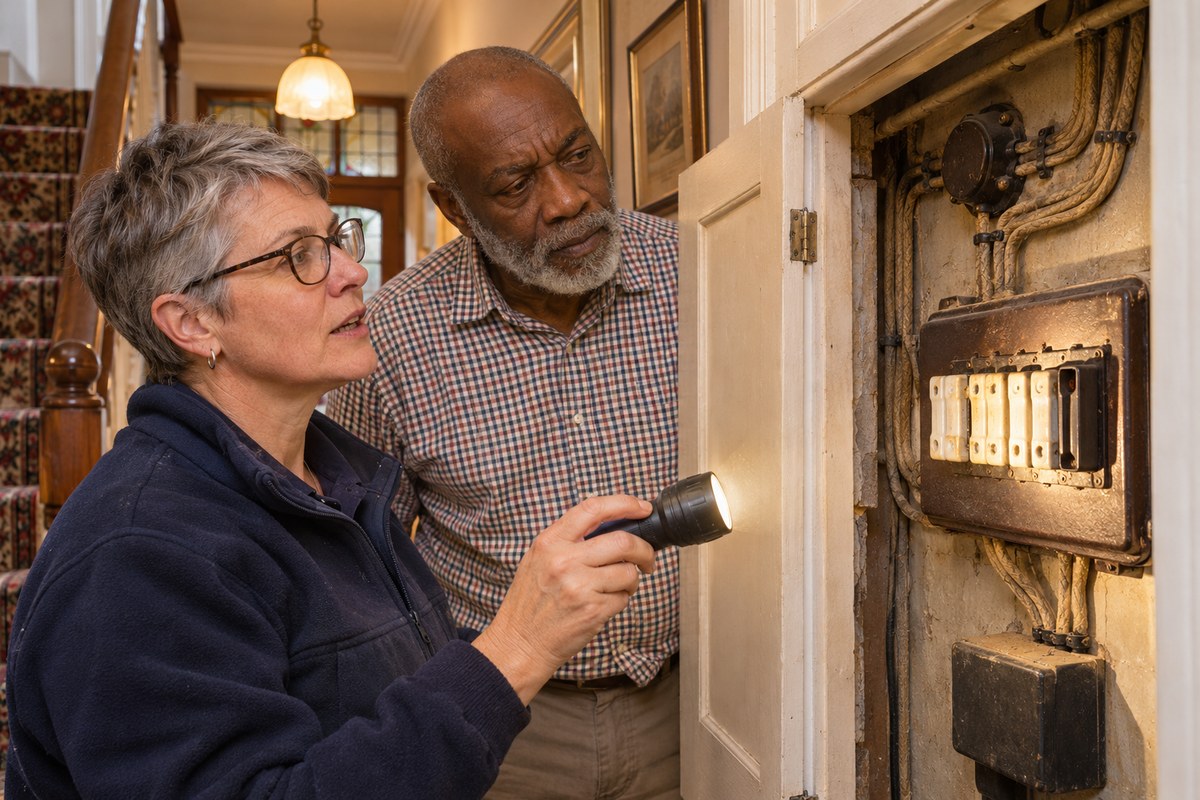
A plumber asked to rewire a kitchen, or an electrician asked to fit a bathroom, should say no straight away and say why. "It's not work we do" is enough of a reason. Customers often don't know which trade they need, so the most useful thing you can add is the trade to look for.
The same goes for work you're not registered or qualified for, and for jobs that need specialist kit you don't have. Say so plainly. A customer is better served by "you need a specialist for that" than by a firm that takes the job and struggles with it.
If you don't know a firm to name, point them to the right register. Gas Safe Register lets customers find or check a registered gas engineer. GOV.UK's page on competent person schemes points homeowners to the Competent Persons Register to find a tradesperson for work such as windows or boilers, and to the Electrical Competent Person Register for electricians.
The last line of the message is the one that keeps the customer. A homeowner who needs an electrician today will need a plumber one day, and they'll remember the plumber who pointed them the right way.
After a visit: say no before you quote
Sometimes you only find out on the visit. The leak is part of a roof that needs replacing, the "small extension" needs structural work, or the customer wants a finish you don't think will last. If you know on site that you won't take the job, say so then, or the same day, before you write a quote.
Don't let a no turn into a quote you hope they'll refuse. It takes you an hour to price, it gives the customer false hope, and it can backfire, as the section on pricing high explains. A short, clear message after the visit is kinder and quicker.
Keep the reason short and about the job. "It's bigger than the work we take on" or "it needs a specialist" is enough. You don't need to list everything you saw, and if the reason is the customer, the next sections cover that. For the full quoting routine, see the guide to writing and following up trade quotes.
Jobs that are too small or too far
A tap washer forty minutes away costs you more in time and fuel than you can charge for it. Decide in advance where your area ends and what your smallest job is, and say so the same way every time. "We cover [area], so that's just outside where we work" is a clear reason customers accept.
For small jobs, there's often a better answer than no. Offer to do it when you're next nearby, add it to a bigger job, or point them to a handyman service if one near you is good. If you have a minimum charge, say it on the call, so a small job either comes in at a price that covers the trip or doesn't come in at all.
Put your area and your smallest job on your enquiry record, so whoever answers the phone gives the same answer. Our enquiry form template has room for the postcode and the job type, which is where these decisions start.
Customers you'd rather not work for
Some calls set off alarms: a customer who wants it done cash with no paperwork, who's fallen out with three firms already, who won't let you see the job before a fixed price, or who wants work done that you think is unsafe. You can say no to any of them, and you don't owe a long explanation.
Keep the reason about the job, never about the person. "That's not a job we can take on" or "we're not able to fit that in" is enough, and it's true. Arguing about why you're saying no turns a short call into a long one, and gives them something to repeat.
If someone is rude or aggressive on the phone, end the call politely and don't ring back. Write a line on the enquiry record, so no one else in the business books them in by mistake.
Pricing high to put a customer off
Many trades quote a job they don't want at a price high enough to put the customer off. It's the "no" that's often left out, and it carries a risk: some customers accept. Then you're doing a job you didn't want, for someone you weren't keen on, and you're held to the price you gave.
A written quote is a fixed price the customer can accept, and our guide to quotes and estimates explains what each one holds you to. If you price a job high, price it at a figure you'd be glad to do it for, and be ready to do it. If you'd turn it down at any price, say no instead.
There's a second cost. A customer who gets a quote twice what they expected tells people you're expensive. A customer who gets a polite no tells people you were straight with them.
Recommending another firm
A good referral turns a no into a favour, but your name goes with it. Recommend only firms whose work you've seen, and who you'd let into your own customer's home. If you aren't sure, name the trade instead.
Ask the other firm before you start sending them work. A firm as booked up as you won't thank you for the calls. Two or three trusted names in other trades, and one in your own for when you're full, cover most no messages.
If another firm pays you for referrals, tell the customer. It doesn't stop the recommendation being a good one, and a customer who finds out later will trust neither of you.
Say no on the phone or in writing?
Say it the way the customer got in touch, so they see the answer where they're expecting it. A call gets a call back, or a text if you can't get through. A website form or an email gets an email. A text gets a text.
On a call, keep it short, give the reason in one sentence, and offer the next step: the date, the name or the trade to look for. Then follow it with a short text, so they have the name and number written down. On a quote visit, say it before you leave if you can, then send the message the same day.
Record every no
Write every turned-down enquiry on the enquiry record, with the reason: too busy, not our work, out of area, too small, after visit, customer. Mark it with a status such as "declined", so it doesn't sit in the list as an open enquiry.
A declined enquiry with a reason is also useful when the same customer rings again. Whoever answers can see that you named a firm for them last time, or that the job was out of area, and give the same answer.
The reasons tell you something after a month. Ten "too busy" no messages in a month say it's time to raise prices, take on help, or tell people your lead time before they ring. Ten "out of area" say your adverts are reaching the wrong places. A run of "after visit" says the questions on your callbacks aren't finding out enough before you go.
Illustrative example: a week of enquiries a plumber turned down
This is an invented example to show the routine. The firm, the customers and the figures are made up.
Illustrative example: a week of enquiries a plumber turned down
Business: two-person plumbing and heating firm, booked about three weeks ahead
Monday: bathroom refit enquiry; too busy; offered the week of the 24th; customer accepted and booked
Monday: kitchen rewire enquiry; not our work; named a local electrician the firm has worked with; customer thanked them
Tuesday: dripping tap 25 miles away; out of area; said where the firm covers and suggested a local handyman service
Wednesday: leak visit found a rotten flat roof; after visit; said no the same day and named the trade to look for
Thursday: caller wanted a boiler fitted for cash with no paperwork; customer; said it wasn't a job the firm could take on
Friday: review of the week: 5 enquiries turned down, 1 booked for later, every one answered the same day
Five no messages that week took less than half an hour in all. One became a booked job three weeks out. The electrician they named rang the following month with a customer who needed a plumber. The rotten roof and the cash boiler were jobs the firm was glad not to have, and neither customer was left waiting for an answer.
The record also showed something the owner hadn't noticed. The tap 25 miles away had found them through a directory listing that showed a wider area than they cover. They corrected the listing.
Write your three no messages before Monday
Copy the three messages into your phone's text shortcuts or your job app, with your own name and business in place. Pick two or three firms you'd trust to recommend, and ask them if they're taking work. Then answer every enquiry this week the same day, including the ones you turn down, and write the reason on the record. At the end of the month, count the reasons and decide whether it's your prices, your area or your callback questions that need changing.
Clear the day's enquiries, then make the callbacks

Free tool
Call handling checklist: a printable daily routine so every trade enquiry gets a callback
Set fixed times each day to clear messages, answer every enquiry and make the callbacks.

Read next
Callback script for trade businesses: what to say, ask and promise when you return a call
What to say when you ring back, including when the answer is a polite no.
Sources checked for this guide
Register and search points checked against Gas Safe Register and GOV.UK. The wording and routines in this guide are our suggestions.